


Discover how a calm down corner can make a big different for your child (and you).
Dealing with melt downs over school work or losing a game? Or maybe someone needs a few minutes away from siblings or peers? I’ve got something super simple that you can do that actually works!
I’ve used a calm down space in our home for years, with five boys who all needed something a little different from it. I’m sharing tips and ideas, plus a few things I wish I’d known when we started.
Why A Calm Down Corner Works for All
With five boys in the house, I learned pretty quickly that “calm down” doesn’t look the same for every kid.
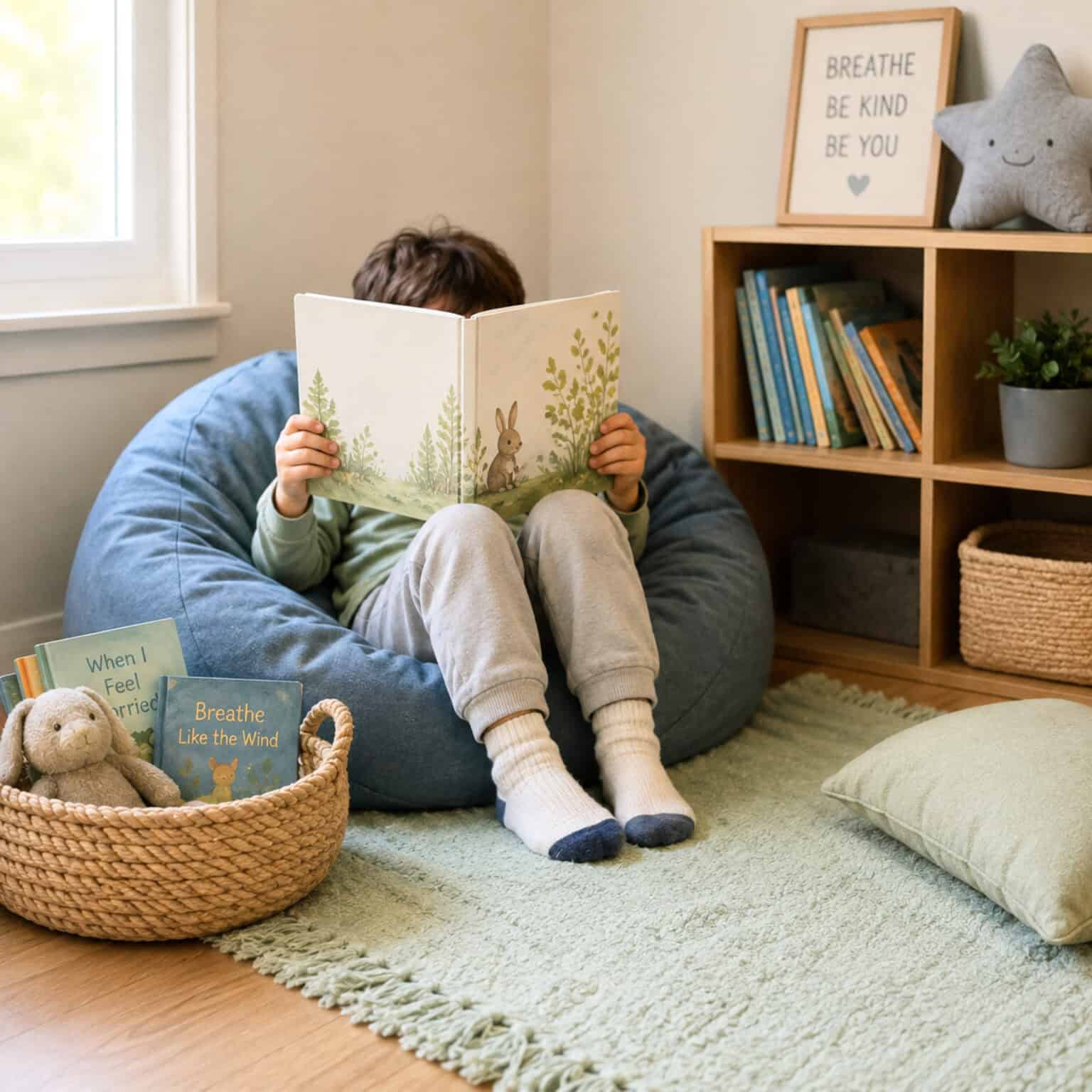
Some of my boys are more introverted, like me. They needed a place to retreat to where they could have a little time and space to themselves, away from the noise and motion of others. Without that outlet, they’d get overstimulated and overwhelmed.
My more extroverted boys needed the opposite kind of help. They weren’t looking for alone time. If anything, I sometimes had to point them toward the calm down corner. Those boys needed to learn that they couldn’t always be on top of someone else, touching everything, talking nonstop. Learning to spend a little time with just themselves was a skill they had to build, not one that came naturally.
And then there’s my second son – a perfectionist through and through. If something didn’t go his way, if he got an answer wrong, struggled with an assignment, or lost a game, he could spiral fast. For him, the calm down corner wasn’t about alone time or redirection. It was a place with calm, reassuring things he could use to reorient himself and get back on track.
Five very different kids, five very different reasons for needing the same space. That’s part of what makes a calm down corner so worth setting up! It flexes to whatever your child needs in that moment.
What Is a Calm Down Corner?
A calm down corner is a designated safe space where a child can go to reset. It’s a place to manage big feelings, get some space, or just regroup before rejoining the world.
Here’s the most important thing to understand: it is not a punishment. It’s not time-out with a nicer name. It’s closer to a gift you give your kids (and yourself).
When you set one up, you’re not telling your child exactly what to do to calm down. You’re giving them a set of healthy choices and letting them pick what works in that moment. Maybe today it’s a book. Tomorrow it’s a breathing exercise. The next day it’s just five minutes of squeezing a stress ball and staring at the wall. All of that is okay.
You’re teaching them there isn’t one right way to calm down. Your children that there are options, and learning to reach for one of them is the actual skill.
A calm down corner works because it gives kids something they often don’t have in the middle of a big feeling: a clear, physical place to go that says “this is allowed, and you’re safe here.”
For an overwhelmed or overstimulated kid, it offers space. For a frustrated perfectionist, it offers a reset. For a kid who needs to learn self-regulation, it offers practice in a low-stakes way, before the skill is needed somewhere harder, like a classroom or a friend’s house.
Calm Corner Ideas
There’s no single “right” list of calm down corner items. I’ve found it helps to think through the senses. Here’s what worked for us:
Touch
- Soft stuffed animals or pillows
- Stress balls or other squishy things to squeeze
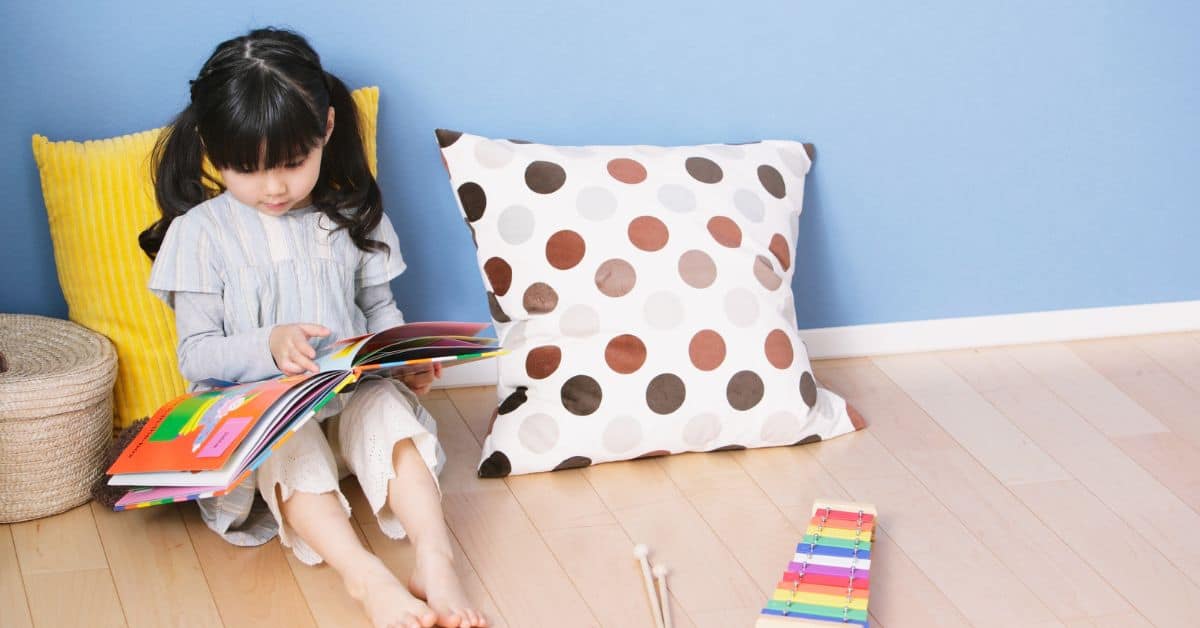
- A bean bag chair, soft blanket, or anything comfortable to sit or sink into
- Wood blocks or simple building toys: Several of my boys found building something with their hands genuinely calming, a way to redirect their energy into something creative instead of whatever had frustrated them
Sight
- A small shelf of books, especially board books or soft cloth books for younger kids and anything calm and familiar for older ones
- Art cards or a poster for visual tools. We used cards of soothing famous artwork the boys could flip through and look at.
- Coloring pages on a clipboard with crayons can be kept up a little higher for older kids who are past the wandering toddler stage.
Sound
- Calming music or an audiobook
- A pair of headphones, even without anything playing work well for blocking out the noise of the room is the win.
Smell
- A drop of lavender essential oil in homemade playdough (here’s our homemade lavendar cloud dough recipe that’s another great option)
- A small diffuser or a calming sachet nearby
Tools for calming down
- Finger tracing cards are simple, screen-free, and something I taught my boys to use on their own
- Breathing exercises, gentle stretches, or guided imagery
- A printable guide or kit that walks kids through it step-by-step when you can’t be right there to talk them through it yourself (more on that below)
Storage and Organization for Your Calm Space
One thing I didn’t think about until I needed to think about it: where does all of this actually live?
In our house, things would get moved, scattered, and lost within about a day if they didn’t have a home. A basket, bin, or small box solved that. It gave everything a designated spot which is honestly one of the best side benefits of having a calm down corner at all.
Bonus: let your kids help decorate the bin. It turns it into a little project of its own, and it helps the space feel like theirs. It’s also a quiet way for you to curate what goes in because these are the calming options available, chosen by you, ready when they’re needed.
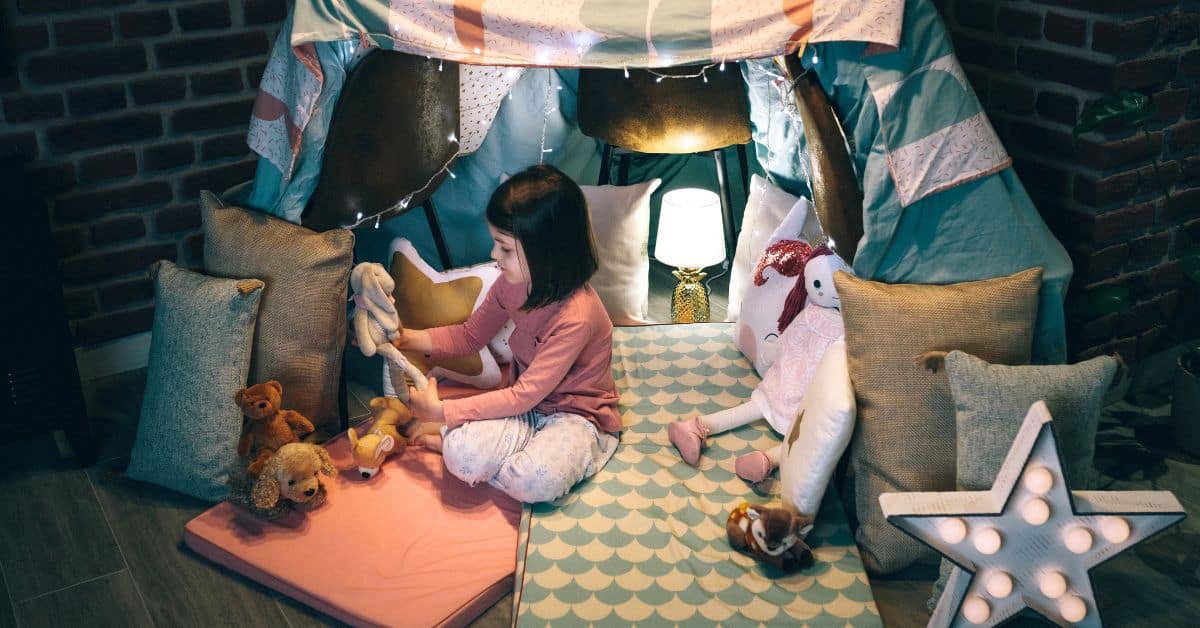
Tweaking It for Your Space and Budget
You don’t need a spare room or a Pinterest-perfect nook to make this work. If space is tight, think calm down space instead of calm down corner.
Start by asking: where in your home are you most often with your kids? That’s usually the best place to carve out even a small piece of room.
- A corner of a bookshelf can hold a small basket of calming items
- A blanket laid out on the floor can become the calm down space in the moment
- A designated couch cushion works just as well as a corner, if that’s what you have
It doesn’t need to be permanent. A bin you pull out and a blanket on the floor is a calm down space the second you say it is. (A calm down corner is great, but a calm down space is the more flexible idea, and one that can even travel with you. More on that soon.)
And budget-wise, well, you likely already have most of what you need. A soft blanket, a favorite stuffed animal, a few books you already own, some homemade playdough. This experience doesn’t have to cost much, if anything, to start.
Setting Expectations to Make Your Calm Corner Successful
Here are a few notes, from someone who’s been doing this a while:
You know your kid best, and that matters here. Some kids genuinely need open-ended time. In fact, I had boys who would fall asleep in our calm down corner as little ones, and that was fine. They needed the nap to recharge, and the corner gave them the safe, quiet place to do it.
Other kids will use the corner to avoid something they don’t want to do, like a chore, an assignment, anything they’re not in the mood for. If that becomes a pattern, a timer can help. Ten or fifteen minutes is usually enough for a genuine reset, and it keeps the space from becoming an escape hatch instead of a tool.
And it won’t always work perfectly. Some days your child will resist going. Some days the corner won’t “fix” the feeling right away. That’s normal. Consistency matters more than perfection because the value builds over time, not in one good (or bad) afternoon.
Printables Make It Easier to Set Up and Enjoy Your Calm Space
You can’t always be right there to walk your child through a breathing exercise or talk them through what to do next and that’s where a printable guide helps. Having something visual and step-by-step gives your child a way to work through it on their own, even when you’re in the middle of something else.
That’s exactly why I created Calm Down Corner Kits that have calm down cards, a steps-to-calm poster, a feelings check-in, and a simple read-aloud guide, all themed and ready to print. They’re built to slide right into the kind of space described above, whether that’s a full corner or a basket and a blanket.
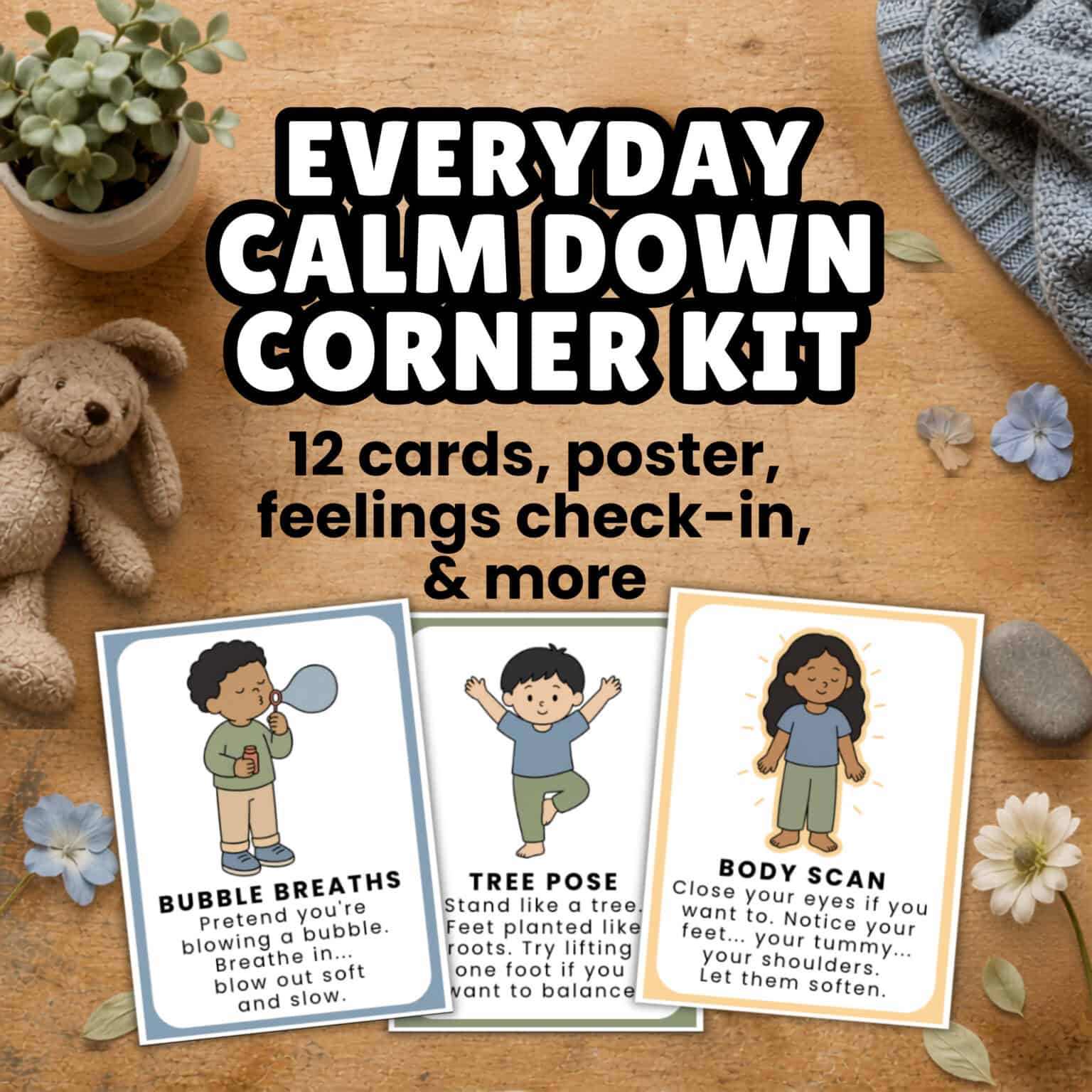
And if you don’t quite have a designated corner yet (or you want something even simpler to start with), finger tracing cards are a great place to begin. Print, go, and your child has a calming tool in their hands in minutes.
Oh, and don’t be surprised if, somewhere along the way, you find yourself wanting to sit in the calm down corner, too. I won’t tell 😉